1. Introduction
Microorganisms are central to the recycling of organic matter, transformation of pollutants, decomposition of agricultural residues and maintenance of ecosystem nutrient balance. They also have major importance in agriculture because microorganisms can either benefit plants through nutrient cycling and organic matter decomposition or cause serious diseases as plant pathogens.
This section connects three closely related areas of agricultural microbiology: environmental microbiology, decomposition biotechnology and plant pathology. Microbial degradation converts complex organic compounds into simpler substances, while bioremediation uses microorganisms or their biological activities to reduce or remove environmental contaminants.
Plant-pathogenic microorganisms, in contrast, utilize plant tissues or plant resources and produce disease. Understanding their characteristics, transmission and disease-producing mechanisms is essential for crop protection.
Major topics covered
2. Bioremediation
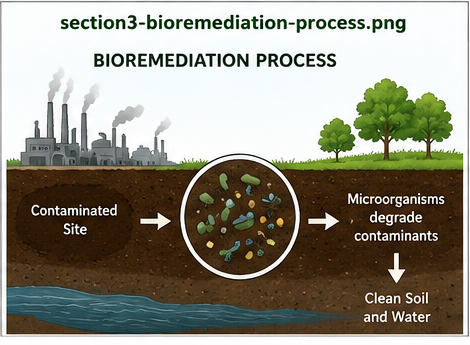
Bioremediation is the use of living organisms, mainly microorganisms and sometimes plants, to remove, transform, detoxify or reduce the concentration or harmful effects of pollutants in contaminated environments.
Microorganisms may use certain pollutants as carbon or energy sources, or may transform them incidentally through metabolic reactions. The final result may be complete mineralization, partial transformation, immobilization or a change to a less toxic form.
2.1 Principles of bioremediation
- Microorganisms possess diverse metabolic pathways.
- Some microorganisms can utilize organic pollutants as carbon or energy sources.
- Other contaminants can be transformed through co-metabolism.
- Environmental conditions determine microbial activity.
- Oxygen availability strongly influences aerobic and anaerobic degradation.
- Moisture, temperature and pH influence microbial growth.
- Nutrients such as nitrogen and phosphorus may limit microbial activity.
- Bioavailability of pollutants influences their degradation.
- Microbial communities may cooperate during degradation of complex compounds.
2.2 Main objectives
- Reduce pollutant concentration.
- Convert toxic substances into less toxic products.
- Mineralize organic contaminants into simpler inorganic products.
- Restore contaminated soil and water.
- Reduce environmental and health risks.
- Provide a relatively sustainable method of pollution control.
2.3 Biodegradation and mineralization
Biodegradation refers to the biological breakdown or transformation of a substance by microorganisms or other biological agents.
Mineralization is a more complete process in which organic matter is converted into inorganic end products such as carbon dioxide, water, ammonium, nitrate, phosphate or other mineral forms depending on the compound and environmental conditions.
2.4 Important microorganisms in bioremediation
| Microorganism/group | Potential role |
|---|---|
| Pseudomonas | Degradation of several organic pollutants and hydrocarbons; metabolic versatility. |
| Bacillus | Enzyme production, hydrocarbon transformation and environmental biotechnology. |
| Rhodococcus | Transformation of hydrocarbons and chemically diverse organic compounds. |
| Mycobacterium-related environmental bacteria | Can participate in degradation of certain hydrocarbons and xenobiotics. |
| White-rot fungi | Extracellular oxidative enzymes can attack lignin and structurally complex pollutants. |
| Actinomycetes | Degradation of complex organic substances and participation in soil biotransformation. |
2.5 Factors affecting bioremediation
- Temperature
- pH
- Moisture
- Oxygen concentration
- Nutrient availability
- Pollutant concentration
- Pollutant bioavailability
- Microbial population and diversity
- Soil texture
- Organic matter
- Redox potential
- Presence of toxic compounds
2.6 Biostimulation
Biostimulation involves modification of environmental conditions to stimulate microorganisms already present at a contaminated site.
For example, nutrients, electron acceptors, electron donors or oxygen may be provided when appropriate to enhance microbial activity.
2.7 Bioaugmentation
Bioaugmentation involves introducing selected microorganisms into a contaminated environment to increase the capacity for degradation or transformation of a target contaminant.
2.8 In situ bioremediation
In in situ bioremediation, contaminated material is treated at its original location without excavating or transporting it to another site.
Advantages
- Less excavation and transportation.
- Lower disturbance of the contaminated site.
- Can be suitable for large contaminated areas.
- Potentially lower handling requirements.
Limitations
- Difficult to control environmental conditions precisely.
- Pollutant accessibility may be limited.
- Heterogeneous soil may cause uneven treatment.
- Very high contaminant concentrations may inhibit microorganisms.
2.9 Ex situ bioremediation
In ex situ bioremediation, contaminated soil or material is removed and treated elsewhere under controlled conditions.
Examples include engineered treatment systems such as biopiles and landfarming, depending on the contaminant and site requirements.
2.10 Comparison of in situ and ex situ bioremediation
| Feature | In situ | Ex situ |
|---|---|---|
| Treatment location | At contaminated site | After removal/transport to treatment area |
| Excavation | Usually minimal or absent | Usually required |
| Environmental control | More difficult | Generally greater |
| Site disturbance | Usually lower | Usually higher |
| Suitable use | Large or difficult-to-excavate contaminated areas | Situations requiring greater process control |
2.11 Xenobiotics
Xenobiotics are chemical substances that are foreign to a biological system. Many pesticides, industrial chemicals, synthetic organic compounds and some pharmaceuticals can behave as xenobiotics.
Some xenobiotics are biodegradable, while others are persistent because of their chemical structure, low bioavailability, toxicity or environmental conditions.
Factors influencing xenobiotic degradation
- Chemical structure
- Solubility
- Adsorption to soil particles
- Temperature
- pH
- Oxygen availability
- Microbial community
- Moisture
- Presence of alternative carbon sources
- Concentration of the compound
2.12 Bioleaching
Bioleaching is the microbial mobilization of metals from ores or other solid materials through biological processes.
Acidophilic microorganisms, particularly certain bacteria and archaea, can participate in oxidation reactions that promote dissolution or mobilization of metals.
General concept
Bioleaching has been applied particularly in the recovery of metals such as copper and in treatment of some low-grade ores.
2.13 Microbial degradation of petroleum
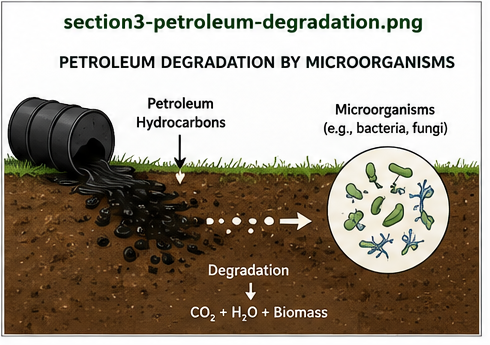
Petroleum consists of a complex mixture of hydrocarbons. Microbial degradation can involve bacteria and fungi capable of transforming alkanes, aromatic hydrocarbons and other petroleum components.
General sequence
- Contact between microorganisms and hydrocarbons.
- Attachment or biofilm formation may occur.
- Hydrocarbon molecules enter or interact with cells.
- Specific oxygenases or other enzymes initiate transformation.
- Intermediate compounds are produced.
- Further metabolic reactions occur.
- Carbon may ultimately be converted to biomass and, under appropriate conditions, carbon dioxide and water.
3. Microbial Degradation of Organic Compounds
Organic matter entering agricultural ecosystems includes crop residues, animal wastes, dead roots, microbial biomass, plant litter and other biological materials. Microorganisms convert these complex materials into simpler compounds through extracellular and intracellular enzymes.
3.1 Degradation vs deterioration
| Degradation | Deterioration |
|---|---|
| Biological or chemical breakdown of a substance. | Loss of quality, usefulness or desirable characteristics. |
| Often involves enzymatic transformation. | May result from microbial, chemical or physical changes. |
| Can be beneficial in nutrient recycling. | Often considered undesirable when it affects food, materials or products. |
3.2 General microbial decomposition
3.3 Cellulose degradation
Cellulose is a major structural polysaccharide of plant cell walls and consists primarily of glucose units linked by β-1,4-glycosidic bonds.
Cellulose is difficult to digest because its chains form hydrogen-bonded microfibrils and may be associated with hemicellulose and lignin.
Major enzymes
- Endoglucanase: attacks internal regions of cellulose chains.
- Exoglucanase/cellobiohydrolase: releases cellobiose or related oligosaccharides from chain ends.
- β-glucosidase: converts cellobiose into glucose.
Important cellulolytic microorganisms include species of Trichoderma, Aspergillus, Penicillium, Bacillus, Clostridium and other specialized decomposers.
3.4 Hemicellulose degradation
Hemicellulose is a heterogeneous group of plant cell-wall polysaccharides. Unlike cellulose, it is chemically diverse and may contain xylose, mannose, arabinose, glucose, galactose and uronic acids.
Microorganisms produce different enzymes depending on the particular hemicellulose component.
Important enzymes
- Xylanases
- β-xylosidases
- Mannanases
- β-mannosidases
- Arabinofuranosidases
- Galactosidases
- Acetyl xylan esterases
3.5 Lignin degradation
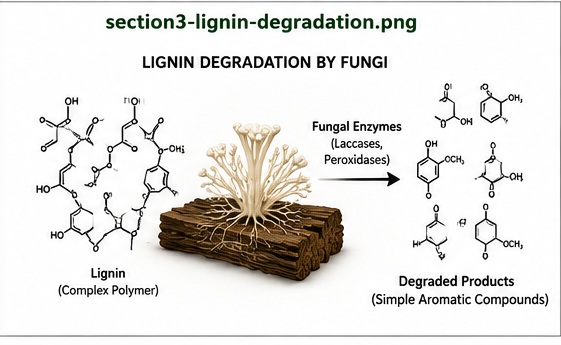
Lignin is a complex aromatic polymer associated with cellulose and hemicellulose in plant cell walls. It provides rigidity and resistance to degradation.
Lignin is particularly important in the decomposition of woody agricultural residues.
Important ligninolytic enzymes
- Laccase
- Lignin peroxidase
- Manganese peroxidase
- Versatile peroxidase
White-rot fungi are particularly important organisms in lignin degradation. Examples include species belonging to genera such as Phanerochaete, Pleurotus and related ligninolytic fungi.
3.6 Chitin degradation
Chitin is a structural polysaccharide composed mainly of β-1,4-linked N-acetylglucosamine units. It occurs in fungal cell walls and arthropod exoskeletons.
Microorganisms produce chitinases and related enzymes that break chitin into smaller products.
3.7 Pectin degradation
Pectin is a complex plant-cell-wall polysaccharide rich in galacturonic acid. Pectinolytic microorganisms produce enzymes such as pectinases, polygalacturonases and pectin lyases.
Pectin degradation is particularly important in the breakdown and spoilage of fruits and vegetables.
3.8 Microbial recycling of organic waste
Agricultural wastes contain cellulose, hemicellulose, lignin, proteins, lipids, minerals and other compounds. Microorganisms transform these materials into microbial biomass, humus-like material, gases and mineral nutrients.
Importance
- Reduces waste accumulation.
- Recycles nutrients.
- Improves soil organic matter.
- Produces compost.
- Can generate biogas.
- Reduces environmental pollution.
- Supports sustainable agriculture.
4. Aerobic Decomposition and Composting
Aerobic decomposition occurs in the presence of oxygen. Aerobic microorganisms oxidize organic substrates and release energy for growth and cellular maintenance.
4.1 General reaction
For a simplified carbohydrate substrate, aerobic respiration can be represented as:
4.2 Aerobic microorganisms
- Bacteria
- Actinomycetes
- Fungi
Different microorganisms dominate different stages of decomposition because temperature, pH, oxygen, substrate availability and moisture change during the process.
4.3 Composting
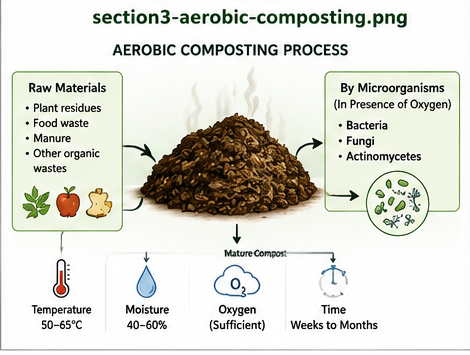
Composting is the controlled biological decomposition of organic materials under predominantly aerobic conditions to produce a stabilized organic amendment called compost.
Main stages of composting
- Initial/mesophilic stage: readily degradable compounds are attacked and temperature rises.
- Thermophilic stage: thermotolerant and thermophilic microorganisms become active; temperatures can become high enough to inactivate many pathogens and weed seeds when adequate conditions are maintained.
- Cooling stage: readily degradable substrates decrease and temperature falls.
- Maturation/curing stage: slower transformation and stabilization produce mature compost.
4.4 Factors affecting composting
| Factor | Importance |
|---|---|
| Oxygen | Required for efficient aerobic metabolism. |
| Moisture | Needed for microbial activity, but excessive water restricts aeration. |
| Temperature | Changes the microbial community and decomposition rate. |
| Carbon:nitrogen ratio | Influences availability of carbon and nitrogen for microbial growth. |
| Particle size | Affects surface area, porosity and aeration. |
| pH | Influences microbial activity and nutrient transformations. |
5. Anaerobic Decomposition and Biogas Production
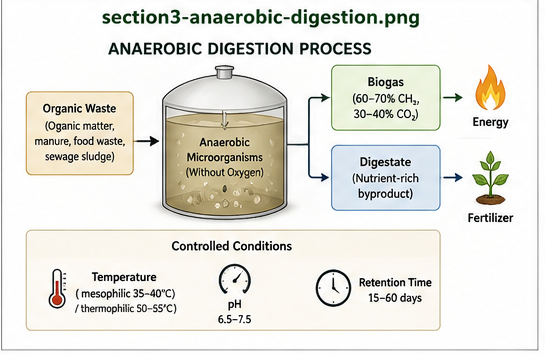
Anaerobic decomposition is the microbial breakdown of organic matter in the absence of molecular oxygen. It is especially important in waterlogged soils, sediments, animal manure, digesters and other oxygen-limited environments.
Anaerobic digestion is a controlled microbial process in which organic materials are converted through a series of metabolic stages into a gas mixture containing mainly methane and carbon dioxide, together with smaller amounts of other gases.
5.1 Anaerobic digestion: four major stages
The anaerobic digestion process is commonly described through four major biochemical stages:
5.2 Stage I — Hydrolysis
During hydrolysis, complex insoluble polymers are converted into smaller soluble molecules that can be taken up by microorganisms.
| Complex substrate | Hydrolysis products |
|---|---|
| Carbohydrates | Simple sugars |
| Proteins | Amino acids and small peptides |
| Lipids | Long-chain fatty acids and glycerol |
Hydrolytic microorganisms secrete extracellular enzymes such as cellulases, proteases, lipases and other hydrolases.
5.3 Stage II — Acidogenesis
During acidogenesis, soluble products from hydrolysis are fermented by acidogenic microorganisms. The products may include:
- Volatile fatty acids
- Alcohols
- Lactic acid
- Hydrogen
- Carbon dioxide
- Ammonia and other products depending on the substrate
5.4 Stage III — Acetogenesis
During acetogenesis, many products of acidogenesis are converted into substrates suitable for methanogens, especially:
- Acetate
- Hydrogen
- Carbon dioxide
Acetogenic reactions can depend strongly on the removal of hydrogen by hydrogen-consuming microorganisms. Therefore, anaerobic digestion involves close metabolic cooperation between different microbial groups.
5.5 Stage IV — Methanogenesis
Methanogenesis is the final major stage of anaerobic digestion. It is carried out by specialized microorganisms known as methanogenic archaea.
Methanogens convert suitable substrates into methane. Two major routes are commonly emphasized:
A. Hydrogenotrophic methanogenesis
B. Acetoclastic methanogenesis
These simplified equations represent major methanogenic pathways; actual anaerobic digestion involves many intermediate reactions and interacting microbial populations.
5.6 Methanogenic archaea
Methanogens belong to the domain Archaea, not Bacteria. They are highly specialized anaerobic microorganisms.
Important methanogenic groups include organisms related to Methanobacterium, Methanobrevibacter, Methanosarcina and Methanosaeta (the latter name is now often treated within Methanothrix in modern classification).
5.7 Biogas
The principal useful gaseous product of anaerobic digestion is biogas. Its major components are methane and carbon dioxide, although exact composition varies with feedstock and process conditions.
| Gas | General significance |
|---|---|
| Methane (CH₄) | Main combustible component and major energy carrier. |
| Carbon dioxide (CO₂) | Major non-combustible component. |
| Hydrogen sulfide (H₂S) | May occur in smaller amounts; corrosive and toxic, requiring control. |
| Water vapour | Normally present in raw biogas. |
5.8 Agricultural wastes used for anaerobic digestion
- Cattle manure
- Poultry manure
- Pig manure
- Crop residues
- Vegetable waste
- Fruit-processing waste
- Food-processing residues
- Slaughterhouse organic waste, where appropriately managed
- Other biodegradable organic wastes
5.9 Factors affecting anaerobic digestion
| Factor | Effect |
|---|---|
| Temperature | Determines the activity and composition of the microbial community. |
| pH | Strongly influences acid-forming microorganisms and methanogens. |
| Moisture | Required for microbial metabolism and transport of soluble substrates. |
| Substrate composition | Determines nutrient availability and degradation pathway. |
| C:N ratio | Influences microbial growth and nutrient balance. |
| Organic loading rate | Excessive loading can cause accumulation of acids and process instability. |
| Retention time | Determines the period available for microbial conversion. |
| Toxic compounds | Ammonia, sulfide and other inhibitors can reduce microbial activity. |
| Mixing | Can improve contact between microorganisms and substrate when appropriately applied. |
5.10 Applications of biogas production
- Cooking fuel
- Electricity generation
- Heat production
- Waste stabilization
- Reduction of uncontrolled methane emissions from wastes
- Production of digestate that can be further managed and used as an agricultural amendment where appropriate
- Integrated livestock and crop production systems
5.11 Anaerobic vs aerobic decomposition
| Feature | Aerobic decomposition | Anaerobic decomposition |
|---|---|---|
| Oxygen | Requires molecular oxygen | Occurs without molecular oxygen |
| Major gas product | CO₂ | Biogas containing mainly CH₄ and CO₂ |
| Major energy pathway | Aerobic respiration | Fermentation plus anaerobic respiratory/syntrophic processes and methanogenesis |
| Heat production | Often substantial in active composting | Generally lower heat release per unit substrate than aerobic oxidation |
| Major application | Composting | Biogas production and anaerobic waste treatment |
6. Plant Pathogens
A plant pathogen is a biological agent capable of causing disease in a plant. Major plant pathogens include bacteria, fungi and fungus-like organisms, viruses, viroids, phytoplasmas, spiroplasmas and plant-parasitic nematodes.
Plant diseases reduce crop yield, quality and economic value. Some pathogens can also affect post-harvest storage and food security.
6.1 Major groups of plant pathogens
| Group | Examples/representatives | Important characteristics |
|---|---|---|
| Bacteria | Xanthomonas, Pseudomonas, Ralstonia, Agrobacterium | Single-celled prokaryotic pathogens; often cause spots, blights, wilts, cankers and galls. |
| Fungi | Fusarium, Alternaria, Puccinia, Ustilago, Botrytis | Cause diverse diseases including wilts, rots, rusts, smuts and leaf spots. |
| Oomycetes | Phytophthora, Pythium and related organisms | Fungus-like organisms causing damping-off, root rot, blight and other diseases. |
| Phytoplasmas | Phytoplasma-associated diseases | Wall-less bacteria-like organisms living mainly in phloem and commonly transmitted by insect vectors. |
| Spiroplasmas | Spiroplasma spp. | Helical wall-less bacteria associated with certain plant diseases and often transmitted by insects. |
| Nematodes | Meloidogyne, Heterodera, Globodera | Plant-parasitic nematodes damage roots and may facilitate secondary infections. |
| Viruses | Many plant viruses | Obligate intracellular infectious agents causing mosaic, chlorosis, distortion, stunting and other symptoms. |
7. Bacterial Plant Diseases
7.1 General characteristics
Plant pathogenic bacteria are generally microscopic prokaryotes that colonize plant surfaces, intercellular spaces, vascular tissues or wounds depending on the pathogen.
Common symptoms
- Leaf spots
- Blights
- Cankers
- Soft rots
- Wilts
- Galls
- Vascular discoloration
- Fruit lesions
7.2 Citrus canker
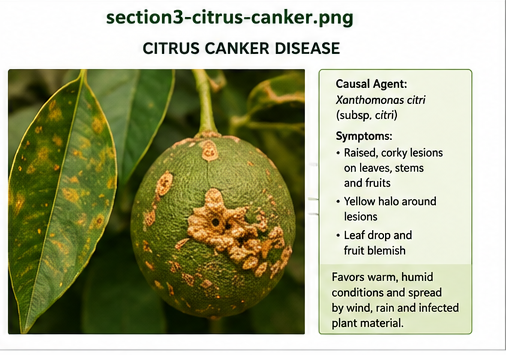
Citrus canker is an important bacterial disease of citrus. It is associated with bacteria of the genus Xanthomonas, particularly strains within the Xanthomonas citri group.
Symptoms
- Raised lesions on leaves.
- Lesions may become corky and crater-like.
- Yellowish halos may develop around lesions.
- Lesions may occur on young shoots.
- Fruit lesions can reduce market quality.
Transmission
- Rain splash
- Wind-driven rain
- Contaminated tools
- Infected plant material
- Human movement and agricultural activities
Management
- Use healthy planting material.
- Remove and properly manage infected plant material where recommended.
- Reduce movement of contaminated material.
- Use appropriate sanitation.
- Use approved disease-management measures and resistant/tolerant cultivars where available.
7.3 Rickettsia-like plant pathogens
Historically, some intracellular plant-associated bacteria were described as rickettsia-like organisms. Modern classification has changed the placement of many such organisms, so the term should be interpreted carefully in contemporary microbiology.
These organisms are important historically because they demonstrated that certain plant diseases could be associated with bacteria-like intracellular agents and vectors.
7.4 Mycoplasma-like organisms and phytoplasmas
Older plant pathology literature frequently used the term mycoplasma-like organisms (MLOs) for wall-less, phloem-associated bacterial pathogens. The modern term phytoplasma is now generally used for these organisms.
Characteristics
- No rigid bacterial cell wall.
- Very small, pleomorphic cells.
- Associated primarily with phloem tissue.
- Often transmitted by sap-feeding insect vectors.
- Can cause major changes in plant growth and development.
Symptoms
- Yellowing
- Stunting
- Witches' broom
- Little leaf
- Phyllody
- Abnormal branching
- Decline
7.5 Phytoplasma transmission
7.6 Spiroplasma
Spiroplasma are wall-less, helical bacteria. Some species are associated with plant disease and are transmitted by insect vectors.
Their spiral morphology and lack of a conventional bacterial cell wall distinguish them from many common plant-pathogenic bacteria.
8. Fungal and Fungus-Like Plant Diseases
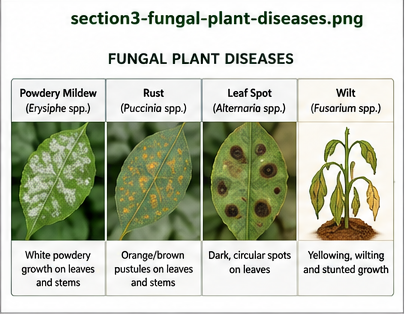
Fungi and fungus-like organisms cause a very large proportion of economically important plant diseases. Their spores can be dispersed through wind, water, soil, insects, infected seeds and plant debris.
8.1 Common fungal disease symptoms
- Leaf spots
- Blights
- Rots
- Wilts
- Rusts
- Smuts
- Mildews
- Cankers
- Damping-off
- Fruit decay
8.2 General fungal infection process
8.3 Important fungal/fungus-like pathogens
| Pathogen/group | Examples of disease |
|---|---|
| Fusarium | Wilt and root diseases. |
| Alternaria | Leaf spots and blights. |
| Puccinia | Rust diseases. |
| Ustilago | Smut diseases. |
| Botrytis | Grey mold and soft rots. |
| Phytophthora | Blights and root/collar rots. |
| Pythium | Damping-off and root diseases. |
9. Nematode Diseases
Plant-parasitic nematodes are microscopic roundworms that feed on living plant tissues. Some species attack roots, while others feed on stems, leaves, bulbs or seeds.
9.1 Major examples
- Meloidogyne: root-knot nematodes.
- Heterodera: cyst nematodes.
- Globodera: important cyst nematodes affecting certain crops.
- Pratylenchus: root-lesion nematodes.
9.2 Root-knot disease
Root-knot nematodes of the genus Meloidogyne induce characteristic galls on roots.
Effects on plants
- Root gall formation
- Reduced water uptake
- Reduced nutrient uptake
- Stunting
- Yellowing
- Wilting under stress
- Reduced yield

9.3 Management of plant-parasitic nematodes
- Crop rotation.
- Use resistant varieties where available.
- Use clean planting material.
- Organic amendments and biological control may be useful in integrated management.
- Soil solarization can reduce certain soil-borne pests under suitable conditions.
- Appropriate nematode-management practices should be selected according to crop and species.
10. Viral Plant Diseases
Plant viruses are infectious agents that require living host cells for replication. They may produce systemic infections and can move through plant tissues.
10.1 Common viral symptoms
- Mosaic patterns
- Mottling
- Chlorosis
- Leaf curling
- Ringspots
- Stunting
- Necrosis
- Fruit deformation
- Abnormal pigmentation
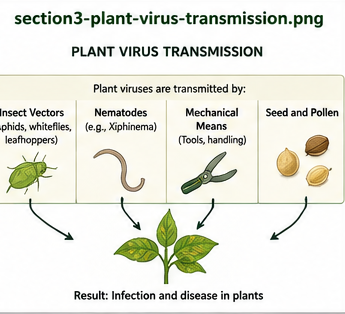
10.2 Viral transmission
- Insect vectors
- Mechanical transmission
- Vegetative propagation
- Seeds in some virus-host combinations
- Pollen in some cases
- Nematode or fungal vectors for selected viruses
11. General Plant Disease Cycle
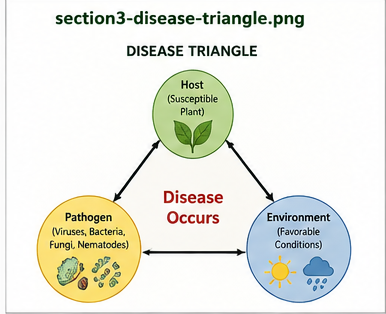
The development of plant disease can be understood as a sequence involving the pathogen, host and environment. A suitable host, a virulent pathogen and favorable environmental conditions are all important components of disease development.
11.1 Disease triangle
The classical disease triangle emphasizes the interaction of three major factors:
- Susceptible host
- Virulent pathogen
- Favorable environment
Disease develops when the required interactions occur over an adequate period. In modern plant pathology, time is often added as an important fourth dimension.
12. General Management of Plant Diseases
12.1 Exclusion
Prevention of pathogen introduction into an area is called exclusion. Quarantine, certification and use of healthy planting material are important components.
12.2 Eradication
Eradication aims to eliminate or reduce the pathogen from a site or host. Examples include sanitation, removal of diseased plants and crop-residue management.
12.3 Protection
Protection prevents successful infection of susceptible plant tissues. Chemical, biological and physical measures may be used depending on the disease.
12.4 Host resistance
Growing resistant or tolerant cultivars is one of the most important components of integrated disease management.
12.5 Biological control
Beneficial microorganisms may suppress plant pathogens through competition, antibiosis, parasitism, predation, production of hydrolytic enzymes, siderophore-mediated competition or induction of plant defense responses.
12.6 Integrated disease management
Integrated disease management combines compatible approaches rather than depending on a single control measure.
13. Connection Between Decomposition, Bioremediation and Agriculture
The topics of this section are closely connected rather than isolated. Microbial decomposition converts agricultural residues into simpler compounds, bioremediation uses microbial metabolism to transform contaminants, and plant pathology studies microorganisms and other biological agents that cause plant disease.
| Process | Microbial activity | Agricultural significance |
|---|---|---|
| Decomposition | Breakdown of organic matter | Nutrient recycling and soil organic matter transformation |
| Composting | Aerobic microbial decomposition | Production of stabilized organic amendment |
| Anaerobic digestion | Sequential anaerobic microbial metabolism | Biogas and waste stabilization |
| Bioremediation | Transformation/degradation of pollutants | Environmental cleanup |
| Plant pathology | Pathogenic interaction with plants | Crop disease and yield loss |
| Biological control | Microbial suppression of pathogens | Disease management |
14. High-Yield Comparison Table
| Topic | Key point | Important terms |
|---|---|---|
| Bioremediation | Microbial/biological treatment of contamination | Biostimulation, bioaugmentation |
| Bioleaching | Microbial mobilization of metals | Metal recovery, microbial oxidation |
| Cellulose degradation | Enzymatic breakdown of cellulose | Endoglucanase, exoglucanase, β-glucosidase |
| Lignin degradation | Oxidative breakdown of lignin | Laccase, peroxidases, white-rot fungi |
| Composting | Controlled aerobic decomposition | Mesophilic, thermophilic, maturation |
| Anaerobic digestion | Oxygen-free conversion of organic matter | Hydrolysis, acidogenesis, acetogenesis, methanogenesis |
| Biogas | Gas generated during anaerobic digestion | CH₄, CO₂ |
| Phytoplasma | Wall-less phloem-associated bacterial pathogen | Insect vectors, yellows, witches' broom |
| Plant virus | Obligate intracellular infectious agent | Mosaic, vectors, systemic infection |
| Nematode disease | Plant-parasitic nematode damage | Meloidogyne, root galls |
15. Quick Revision
Bioremediation
- Uses biological activity to reduce or transform contaminants.
- Biostimulation stimulates indigenous microorganisms.
- Bioaugmentation introduces selected microorganisms.
- Can be in situ or ex situ.
- Efficiency depends strongly on environmental conditions.
Decomposition
- Microorganisms break complex organic compounds into simpler products.
- Cellulose is degraded by cellulolytic enzymes.
- Lignin degradation involves oxidative enzymes.
- Chitin degradation involves chitinases.
- Pectin degradation involves pectinolytic enzymes.
Composting
- Predominantly aerobic controlled decomposition.
- Includes active heating and maturation stages.
- Produces stabilized organic material.
Anaerobic digestion
- Occurs without molecular oxygen.
- Hydrolysis → acidogenesis → acetogenesis → methanogenesis.
- Methanogens are archaea.
- Biogas contains mainly methane and carbon dioxide.
Plant pathogens
- Include bacteria, fungi, oomycetes, viruses, phytoplasmas, spiroplasmas and nematodes.
- Disease depends on host, pathogen and environmental conditions.
- Management is best approached through integrated disease management.
16. Examination Preparation
Important 10-mark questions
- Describe bioremediation and explain its principles, approaches and applications.
- Differentiate between in situ and ex situ bioremediation.
- Explain microbial degradation of cellulose with suitable enzymes and pathways.
- Describe microbial degradation of lignin and explain the role of ligninolytic fungi.
- Explain aerobic composting and discuss factors affecting composting.
- Describe anaerobic digestion in detail, including hydrolysis, acidogenesis, acetogenesis and methanogenesis.
- Explain the biochemical basis of methane production from agricultural and animal wastes.
- Describe biogas production and its agricultural applications.
- Explain microbial degradation of organic wastes and its importance in agriculture.
- Describe bacterial plant diseases and explain citrus canker.
- Explain phytoplasma diseases, their characteristics and transmission.
- Describe fungal plant diseases and their general management.
- Explain plant-parasitic nematodes and their effects on crops.
- Describe plant viral diseases, symptoms and modes of transmission.
- Explain the plant disease triangle and integrated disease management.
Important 5-mark areas
- Biostimulation
- Bioaugmentation
- Xenobiotics
- Bioleaching
- Cellulases
- Ligninolytic enzymes
- Composting stages
- Anaerobic digestion
- Methanogenesis
- Biogas
- Phytoplasmas
- Spiroplasma
- Citrus canker
- Root-knot nematode
- Disease triangle
Important 2-mark terms
- Bioremediation
- Biodegradation
- Mineralization
- Xenobiotic
- Bioleaching
- Composting
- Hydrolysis
- Acidogenesis
- Acetogenesis
- Methanogenesis
- Methanogen
- Biogas
- Cellulase
- Laccase
- Phytoplasma
- Spiroplasma
- Plant pathogen
- Plant-parasitic nematode
- Plant virus
- Disease triangle
17. Final Concept Map
Composting
Digestion
Thus, this section brings together the major agricultural roles of microorganisms: decomposition, nutrient recycling, environmental cleanup, waste treatment, renewable-energy production and plant disease.
18. PNG Images Required for This Page
Generate the following PNG images later and place them inside: D:\studywithme MSN\images\
| Filename | Image to generate |
|---|---|
| section3-bioremediation-process.png | Detailed microbial bioremediation process showing contaminated soil/water, microorganisms, degradation and detoxification. |
| section3-petroleum-degradation.png | Microbial degradation of petroleum hydrocarbons. |
| section3-lignin-degradation.png | Enzymatic degradation of lignin by ligninolytic microorganisms. |
| section3-aerobic-composting.png | Stages of aerobic composting: mesophilic → thermophilic → cooling → maturation. |
| section3-anaerobic-digestion.png | Detailed anaerobic digestion diagram: agricultural/animal waste → hydrolysis → acidogenesis → acetogenesis → methanogenesis → CH₄ + CO₂/biogas. |
| section3-citrus-canker.png | Realistic educational image showing citrus canker lesions on leaves and fruit. |
| section3-fungal-plant-diseases.png | Educational composite showing representative fungal plant disease symptoms. |
| section3-root-knot-nematode.png | Root-knot nematode infection showing Meloidogyne and root gall formation. |
| section3-plant-virus-transmission.png | Plant virus transmission through vector/mechanical/propagation routes. |
| section3-disease-triangle.png | Clearly labelled plant disease triangle: susceptible host + pathogen + favorable environment. |
19. Final Takeaway
Microorganisms are indispensable components of agricultural ecosystems. Their ability to degrade complex organic compounds supports decomposition, nutrient recycling and soil fertility. The same metabolic diversity can be used deliberately for bioremediation and anaerobic waste treatment.
Anaerobic digestion is particularly important because it converts biodegradable agricultural and animal wastes through a coordinated microbial community into biogas and stabilized digestate. The four major stages are hydrolysis, acidogenesis, acetogenesis and methanogenesis.
At the same time, microorganisms and other biological agents can act as plant pathogens. Understanding the pathogen, host, environment, disease cycle and transmission route provides the scientific basis for integrated plant disease management.
Organic matter → microbial degradation → decomposition/recycling
Pollutants → microbial transformation → bioremediation
Agricultural waste → anaerobic digestion → methanogenesis → biogas
Pathogen + susceptible host + favorable environment → plant disease